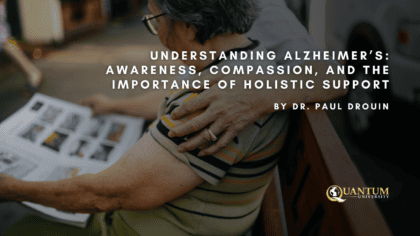
World Alzheimer’s Month invites us to deepen our understanding of a condition that affects individuals, families, caregivers, and communities around the world. More than a moment of recognition, it is an opportunity to consider how we support people experiencing Alzheimer’s disease and other forms of dementia with greater compassion, understanding, and dignity.
Changes in memory and cognition can affect far more than our ability to remember. They can influence daily life, relationships, independence, communication, and a person’s sense of connection to the world around them. For families and caregivers, the journey can bring uncertainty, grief, patience, tenderness, and profound responsibility.
These experiences remind us that caring for someone with cognitive decline involves more than addressing a medical condition.
The individual remains at the center.
When abilities change, the need to feel safe, respected, connected, and valued does not disappear. If anything, these needs can become even more important. A familiar voice, a calm environment, a meaningful interaction, or simply the presence of someone who cares can take on greater significance.
Awareness also gives us an opportunity to challenge the stigma and misunderstanding that can surround dementia. Cognitive changes can sometimes cause people to withdraw from someone they once knew well or to focus primarily on what has been lost. Yet there is still a person deserving of our attention, patience, and respect.
This is where a holistic perspective can offer something meaningful.
Scientific research, appropriate medical care, and continued advances in our understanding of neurological disease remain essential. At the same time, supporting well-being can include attention to emotional needs, environment, relationships, daily routines, meaningful engagement, and the quality of human connection.
Healing, in this context, may take on a different meaning.
It may not always mean reversing a condition. It can also mean preserving dignity, creating comfort, reducing distress, supporting quality of life, and making space for moments of genuine connection.
This understanding is also reflected in how we approach education at Quantum University. We encourage practitioners to consider the many dimensions that can influence an individual’s experience of health and to recognize that knowledge must be accompanied by empathy, sensitivity, and respect.
When supporting individuals and families facing complex cognitive and neurological challenges, this broader perspective becomes especially important. Practitioners can play a valuable role by understanding the whole person, recognizing the importance of appropriate medical care, and helping create supportive approaches to overall well-being within their professional scope.
We must also remember those who provide care.
Family members and caregivers may carry responsibilities that are physical, emotional, and deeply personal. Their days can involve difficult decisions, changing relationships, exhaustion, uncertainty, and extraordinary acts of patience and love. Supporting them is an important part of supporting the person they care for.
Perhaps one of the most important lessons of this month is that a person’s value is never determined by what they can remember, communicate, or do independently.
Even as memory changes, the need for kindness remains.
The need for connection remains.
The need for dignity remains.
Awareness becomes meaningful when it changes how we respond to one another. Through education, greater understanding, compassionate support, and continued scientific progress, we can help create communities in which individuals living with dementia, and those who care for them, feel less alone and more deeply supported.
Warm regards,
Dr. Paul Drouin, M.D.